Proudly Made in India

Bharaj Machineries - Manufacturer of Rotocure in Mumbai, India.
The innovation of rubber manufacturing begins well in advance of production. Every successful formulation, compound, and product has been rigorously tested, refined, and validated before being built on the production line. The accuracy of these developmental processes directly affects product quality, efficiency, and long-term success.
Bharaj Machineries supplies advanced lab equipment to enable manufacturers, research facilities, educational institutions, and quality-control laboratories to develop confidently and test rubber compounds and their optimization. The laboratory systems we provide allow users to evaluate material behaviour, processing characteristics and final product performance at the laboratory scale in an environment that accurately simulates production conditions.
Bharaj offers a comprehensive line of laboratory solutions that have been designed specifically for use in modern R&D of rubber materials, including mixing, dispersions, calendering, and compression moulding.
Today's manufacturers are under constant pressure to create new compounds and keep complying with strict quality regulations. The laboratory plays a very important part in understanding how materials behave and maintaining quality standards during the production of multiple batches.
Our range of lab equipment helps manufacturers:
Each machine is engineered to provide reliable, repeatable, and accurate testing conditions that closely simulate actual manufacturing environments.
Evaluating rubber compounds and the production of test specimens for analysis remains one of the principal applications for compression moulding.
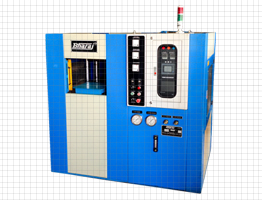
The BCP-75 Laboratory hydraulic press has been specifically engineered for laboratory operations that require accuracy, repeatability, and process control.
Technical Specifications
Laboratory hydraulic press users are able to maintain precise temperatures and pressures during the entire moulding cycle, enabling accurate testing and dependable sample preparation.
As an Advanced Laboratory press, this machine gives repeatable compression-moulded results that help support research, product development, and quality assurance activities.
Main Features & Benefits
Scientists seeking accuracy and repeatability can expect reliable results with the Bharaj Laboratory press, regardless of the rubber formulations used in the sample.
Compounding accurately is your first step in developing a compound.
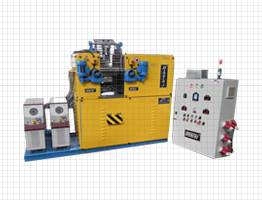
The BMM-6 mixing mill allows for laboratory-scale evaluations of rubber compounds under controlled conditions. During this process, users can analyze the behaviour of the compound and optimize the formulation before production-scale implementation.
Technical Specifications:
Researchers will benefit from the ability to adjust the roll speed and the friction ratio in simulating various processing environments, thus obtaining a better evaluation of the compounds' performance.
Benefits of Using BMM-6:
These attributes of BMM-6 make it an indispensable part of any contemporary rubber testing laboratory.
Dispersion Quality is one of the most critical factors in determining the final performance of a product. Poor dispersion will often lead to variation in physical properties, poor product quality, and/or difficulties in processing.
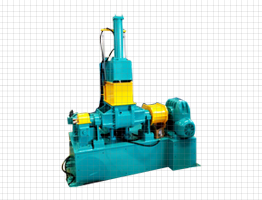
The BMK-5 Laboratory Kneader has been designed specifically to provide optimal dispersion performance when processing small quantities of both natural and synthetic rubber materials.
It has been engineered to allow compounders/researchers to have the flexibility needed in order to develop advanced materials and formulations.
Utilization Benefits:
It allows laboratories to evaluate the performance of compound formulations before they are scaled up into production environments; consequently, reducing the costs associated with development and increasing the confidence level of the process.
Calendaring has a major influence on evaluating and determining the quality of sheets (sheet quality, sheet thickness consistency, sheet formation, and material behaviour).
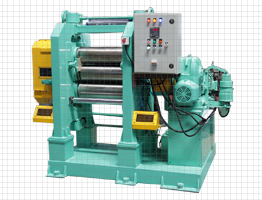
This BCM-3-6 laboratory calendar has been designed to enable you to accurately form sheets and validate a process for research or testing purposes.
Technical Features:
Using the variable speed system, operators can evaluate the behaviours of materials under different processing conditions while keeping sheet formation under good control.
One of the most significant obstacles in the development of compounds is accurately predicting how they will behave when produced on a larger scale than what has been tested.
Bharaj's laboratory equipment has been created to address these obstacles by providing laboratory-based systems that replicate what occurs within an actual manufacturing environment with a high degree of precision.
With our machines, manufacturers can evaluate everything from mixing characteristics, through dispersion quality, to calendaring performance and moulding performance while providing manufacturers with data on how to proceed with manufacturing decisions.
This process provides:
We know at Bharaj Machineries that research and development is a critical component of overall manufacturing success. As such, our lab equipment is developed with the same level of dedication to precision, dependability, and performance as our production-sized equipment.
Some of the reasons customers have selected Bharaj are:
Bharaj can provide you with laboratory presses for compression moulding, hydraulic presses for precise testing, kneaders for developing compounds, or complete laboratory systems to assist in innovating and improving quality in all facets of your projects.
Continuous innovation, materials innovation, and improved processes are critical to the future of the rubber manufacturing machines. To achieve these objectives, laboratory systems that provide accurate and repeatable results are vital.
Bharaj offers the technology necessary to accomplish modern research, quality assurance, and product development initiatives. Advanced laboratory solutions for manufacturers enable them to convert ideas into ready-to-manufacture machines.
A Laboratory hydraulic press allows manufacturers to simulate actual moulding conditions such as temperature, pressure, and curing cycles on a smaller scale, helping validate compound behavior before moving to full-scale production.
Variable friction ratios help researchers study how different shear forces affect compound dispersion, filler distribution, and processing characteristics, providing valuable insights during formulation development.
A laboratory kneader enables controlled dispersion of fillers, polymers, and additives in small batches, allowing R&D teams to optimize formulations before committing raw materials to production-scale trials.
A paperless temperature recorder provides accurate digital process data, helping laboratories maintain traceability, improve repeatability, and analyze curing performance during compound development and testing.
Laboratory testing helps identify potential processing issues, curing challenges, and formulation inconsistencies before commercial production begins, minimizing costly trial-and-error on the manufacturing floor.
While a Laboratory press evaluates moulding and curing performance, a mixing mill focuses on compound preparation and material development. Together, they provide a complete platform for formulation testing and process validation.
Key considerations include batch size requirements, dispersion quality, control systems, ease of cleaning, compound versatility, and the ability to replicate production-scale mixing conditions.
A laboratory calendar helps evaluate sheet formation, thickness consistency, surface finish, and material behavior under controlled conditions, allowing manufacturers to optimize processing parameters before scaling up.
Modern lab equipment is specifically designed to simulate production processes such as mixing, calendaring, and moulding, providing reliable data that supports scale-up decisions and process optimization.
PLC-controlled Laboratory press systems offer precise control over process parameters, improved repeatability, automated operation, and data consistency, making them ideal for advanced rubber research and quality assurance applications.